The office is more than just a space. It's a place where people come together to collaborate and change the world around them. The global pandemic accelerated the evolution of the workplace and forced companies to reconsider when and how best to use the office in the future.
The second part of the study examines:
- historical and future role of the office
- impact of remote work on business metrics, and in particular productivity, engagement and creativity of employees
- importance of walkable urban environment
Key findings
3 arguments for working in the office
COVID-19 revealed a trend that had been brewing for a long time - the office is no longer just a place to work. It's a place of productive interaction and inspiration. Here are 3 reasons why the office remains in demand even in an era when almost all work can be done remotely:
- an environment that makes it easier to concentrate on getting work done
- employees' need for socialization, as well as its benefits for the company - the opportunity for cooperation, mentorship and knowledge sharing
- the ability for direct control over the work process by management
Hybrid workplace: balance between traditional office and remote work
Practice shows that the optimal option for the future workplace is the golden mean between traditional office and remote work:
- employees want to have a choice about where they work today - at home or in the office
- employees do not want to completely give up the traditional office
The degree of this balance depends on corporate culture, employee personality, job responsibilities, and team development dynamics. Research shows that the optimal work-life balance is achieved with remote work up to 2.5 days per week. Increasing this period worsens relationships with colleagues.
Driving forces of corporate culture and work environment
Below are 5 factors that will significantly affect the future of offices in the post-COVID world:
- Productivity / result
The work environment can increase or decrease productivity depending on the role, personality and complexity of the functions performed by the employee, as well as the number of tasks that need to be completed on a given day.
- remote work can increase productivity by reducing commute time to the office, stress and constant work interruptions
- productivity depends on the type of work performed, the degree of interaction with other people required for success, as well as the quality of the remote workplace
- Innovation / creativity
The impact of remote work on creativity is ambiguous and confirms that a combination of remote and office work is beneficial. Periodic change of scenery brings tangible results in terms of creativity. However, this does not apply to permanent remote work, so offline meetings are still necessary.
- Company culture and branding
Reducing the time of personal interaction means that employees are less likely to be involved in corporate culture, and it will be more difficult for managers to reinforce certain values through traditions and customs.
- Satisfaction / employee retention
By offering employees a choice of workplace - in the office or remotely - the employer increases employee loyalty. But at the same time, working exclusively from home is often associated with lower employee results.
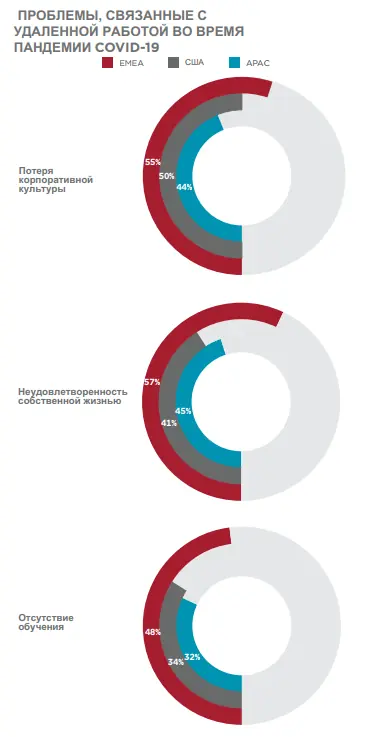
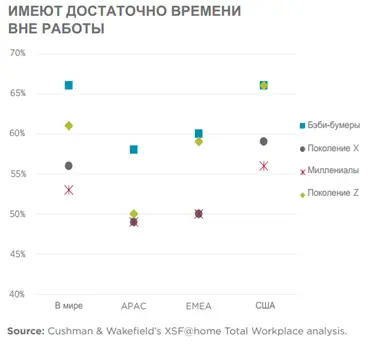
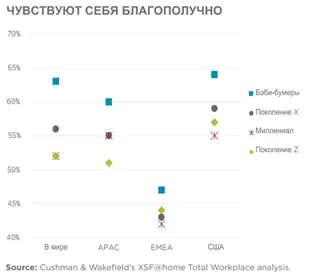
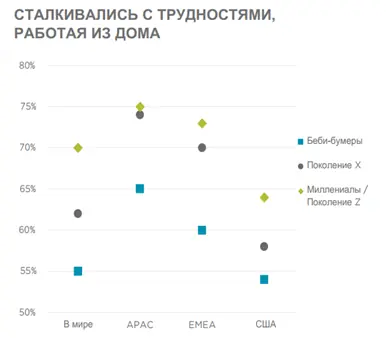
- only 55% of employees engaged in remote work during COVID-19 restrictions "feel good"
- more than a third of employees (36%) working remotely during the COVID-19 pandemic do not feel that they are learning anything and gaining useful experience. Formally, the learning process continues, but the transfer of informal knowledge and mentorship is difficult.
- Location and construction strategy
The walkability trend in urbanism, which has been strengthening over the last 20 years, is unlikely to be reversed. Multi-purpose spaces in both urban centers and suburbs will be in demand if companies use remote work more in the future.
Key conclusions
- Having examined the main driving forces affecting the future of the office, Cushman & Wakefield consider it unlikely that companies will be able to ensure stable 100% remote work in the long term. This is justified only as an extreme measure for extraordinary events like COVID-19
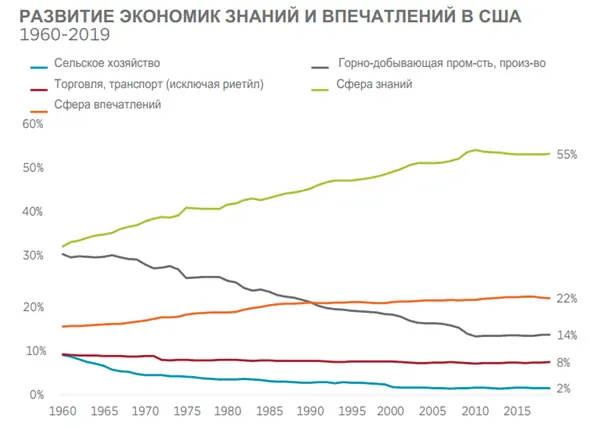
- The prerequisites for maintaining the role of the office in business and forming demand for office space in the long term remain. This is especially relevant for the service sector, which has become increasingly important for the modern economy over the last 50 years, more than agriculture or industry
- In the cases examined, the impact of remote work was a matter of magnitude (how often employees can work from home) and choice (which employees can work remotely).
- Every company involved in the study ultimately still used office space. Thus, the post-COVID future will likely be defined by companies seeking the right balance of remote work to advance their organizational priorities, not by those striving for an office-free world.
OVERVIEW
The commercial real estate industry is experiencing the most dramatic structural shift in its more than 200-year history. The combination of severe market decline and global pandemic forced businesses to reconsider how to use office spaces and what size.
Impact of market downturn on office workers
According to the World Bank, in Q2 2020, 93% of world economies were in recession, more than during the Great Depression. In 2020, the US entered its steepest economic downturn since the Great Depression. US GDP contracted at an annualized rate of -5% and -31% in the first two quarters of 2020. And unemployment in September was 7.9%, more than double the February level. At the same time, countless working-age people faced wage cuts, temporary leave, or reduced working hours. According to Moody's Analytics, in Q2 2020, 64.1 million non-agricultural jobs were lost in the world's 50 largest economies. In the first quarter, this economy employed 2.3 billion non-agricultural workers.
However, office workers were somewhat insulated from these destructive processes - they learned to perform their work duties from home. According to a survey conducted at Stanford University in May 2020, up to 60% of US economic production depended on working from home. At the same time, 42% of all workers worked from home, 33% of workers did not work at all, and only 26% of workers traveled to work. This is why the very idea of the office is being reimagined, as workers consider working from home not only possible but in some cases preferable.
Even if employees don't work remotely all the time, most of them have the opportunity to sometimes work from home. According to Glassdoor, one of the largest employment and recruitment sites, 54% of office employees in 2020 reported having access to work from home, compared to only 28% in 2011.
Another study shows that more than 44% of all office workers in the US have the ability to work remotely, although in reality only 11% do.
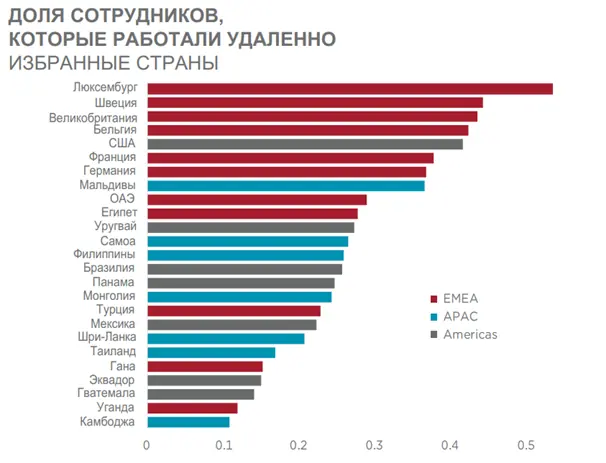
And a recent study by the University of Chicago established an upper limit for all office workers who can work remotely in the US - 37%. Globally, this figure ranged from 10% to 40% in 10 different European countries, including Denmark (41%), UK (44%), Switzerland (45%) and Luxembourg (53%).
Examining the role of the office
Over the last 200 years of history, 4 economic sectors have emerged, each based on the previous level. For thousands of years, agriculture was the foundation of all economies. In developed economies, the superstructures are:
- industry (mining and manufacturing)
- knowledge economy (education, tourism, research and development, information technology)
- experience economy (including retail)
Each new economic sector initially grew rapidly in terms of employment and GDP contribution (absolute and relative). At the same time, agriculture and subsequent economies became more productive, requiring fewer relative workers. In none of the previous economies was total output ever reduced; in fact, they continued to grow, but their relative share of workers and GDP output fell.
Industrialization peaked around 1960. The constant component of the modern economy is trade, transportation and utilities. This fundamental component of the economy has remained surprisingly stable over the last 60 years. For example, in the US, it employs about 25% of the population, despite technological development.
Starting around 1960, the service sector and knowledge economy began to develop. It includes higher education services, various technological, scientific, managerial and creative services. Much of the work performed by workers in this sector is done in offices. During the 1990s, there was significant growth in office space for rent in Europe. For example, Amsterdam (+64%), Central London (+65%) and Dublin (+80%). More recently, during the last economic boom, office space for rent in Asia-Pacific cities doubled (for example, in Shanghai, Beijing, Hyderabad, Jakarta and Manila).
As with previous economic sectors, many expect the knowledge economy to peak at some point. It is becoming increasingly evident that the next sector is the experience economy, which includes tourism, restaurants, live music concerts, professional sports and culture. This rapidly growing sector is partly because tourism is one of the five largest industries in the world, and museums are visited by more people than all professional sports events.
In many respects, the experience economy is the sector where employees of the previous sector now find work. From an economic point of view, one of the biggest disasters of the COVID-19 pandemic is that it disproportionately affected the experience economy.
The proximity and personal interaction that the pandemic currently limits are at the core of the experience economy. The viability of the experience economy has led to increased asset values in walkable urban areas. This potential accumulates and will be released when the world defeats COVID-19 and returns to normal life.
How the experience economy affects the profitability of commercial spaces
The experience economy makes commercial spaces more profitable. In retail, an excellent example is the Apple Store.
Historically, the most profitable retail category (except gasoline) is jewelry stores selling very valuable but small items. They require little space, so brands like Tiffany & Co. have revenue of about $2,951 per square foot. While leading apparel retailers like Lululemon Athletica had revenue of about $1,560 per square foot.
Apple stores' average revenue is $5,546 per square foot - 17 times the average. This is due to both the relatively small products (computers, phones, tablets, etc.) and the fact that Apple creates an educational experience. Previously low-skilled retail workers were transformed in Apple stores into consultants. Customers don't just make the initial purchase but constantly return for instructions at the Genius Bar, which allows selling new and improved products.
History of cities and offices
In the agricultural era, only simple dwellings, small trading and production facilities were built. Palaces were the privilege of the rich and noble, who made up 1% of the total population. And only religious buildings were high-rise. Offices are a product of the industrialization era and the service economy era.
Cushman & Wakefield suggest that offices arose due to 4 emerging needs of society, which are well known to many real estate professionals:
- Centralized management and control by management
- An environment that promotes productivity, knowledge and information exchange between employees
- Need for capital investment
- Social needs of employees that reinforce organizational culture
In the post-COVID world, changes may occur in the prevalence and priority of each of these for companies and employees.
Why are offices located in cities?
Before considering why we have offices at all, we must think about why we have cities and why people and organizations prefer to locate near each other. Economists call the forces that lead to the creation of cities agglomeration. This term was introduced into use by Alfred Marshall in 1890.
Before considering why we have offices at all, we must think about why we have cities and why people and organizations prefer to locate near each other. Economists call the forces that lead to the creation of cities agglomeration. This term was introduced into use by Alfred Marshall in 1890.
The 3 main agglomeration factors are:
- desire of people and companies to be near resources
- be near other people
- be near important ideas.
The last two are most important for companies using offices.
Over time, access to people - or "labor market pooling" - led, for example, to the concentration of technical talent in the San Francisco Bay Area. Companies knew that there was a critical mass of specialized workers there. New technical workers also understood that they could maximize their labor potential by locating in this region.
Knowledge dissemination is the soft power that stimulates innovation. New York and London are proof of this. And the fact that the tallest building in the 30 largest megacities in the world is an office tower is no coincidence at all.
Urban theorist Lewis Mumford in his book "The City in History" notes that cities developed and grew to promote religion, provide security (for example, city walls) and facilitate trade. Today, most cities exist for commercial reasons. Fewer cities are places of pilgrimage compared to ancient times and before the modern era. If there was any structure that dominated the horizon previously, it most likely served religious purposes, whether the ziggurats of Mesoamerica or St. Paul's Cathedral in London. Today it is usually an office building because companies need unique physical space, proximity to each other and commerce.
Studying the history of architecture
The first office-like space appeared in the Renaissance, in the 16th century. Government officials, merchants and professionals worked either from government palaces, or, more likely, from their own home, which served as both office and warehouse.
The earliest offices in Western Europe can be considered coffee houses. In 1663, there were 82 such establishments in London. They served as places where "officials, dramatists, journalists and members of parliament gathered around long wooden tables." This is where the London Stock Exchange, Sotheby's and Christie's auctions, and insurance companies were born. Hipsters with laptops filling cafes and coworking spaces are nothing new - this trend existed more than 350 years ago when these houses served as part of a coffee house and coworking space.
London also became the place of 2 key architectural contributions to office history. The first is the Old Admiralty Building, built in 1726. Here, spaces were provided where naval officers and their functionaries could work with numerous documents, issue orders and send them to any corner of the constantly expanding naval colonial empire. This is an early example of one of the 4 main reasons for office development - the need for centralized command, control, management and communication. The Admiralty is still occupied today, its layout familiar to 20th-century office workers: officials and workers in a windowless core with perimeter for officials and naturally lit offices.
By the 20th century, the 3rd factor in office development came into play - the need for investment. Companies required specially built offices to house accounting tabulation machines, physical storage cabinets for orders and phones to ensure communication.
By the mid-to-late 20th century, when knowledge-based work became predominant, office buildings still met management and control requirements at maximum worker productivity. And growing capital needs meant more complex telecommunications networks, installation spaces and servers. These conditions could not be reproduced at home until the 1990s when portable computers and internet connectivity became widely available. The expansion of broadband networks and the decrease in computer costs further reduced the link between investment needs and the office.
The requirement - the desire to maintain social and cultural connections - is a more modern phenomenon. Its roots go back to the 1970s with the emergence of environmental psychology along with growing attention to human behavior that increasingly views workers as more than just production robots.
One of the apotheoses of the modern office is Googleplex, built in 2004 as Google's headquarters in Mountain View, California. It combines all 4 factors: control by management and ensuring productivity is harmoniously combined with investments (for example, server rooms and other secure zones). Also, the factors of social and cultural importance that promote morale and encourage cooperation and knowledge sharing between employees are not overlooked.
Google was at the forefront of developing the quirky corporate culture of modern technology companies: casual codes of behavior, games in common office spaces and diverse dining. One of the reasons for these efforts is to promote physical and social interaction between computer programmers and engineers who would otherwise not be predisposed to communicate.
Googleplex may be an unrealistic solution for many tenants, but it embodies the aspiration of the modern office to reflect and reinforce corporate culture. The social needs of employees and cultural characteristics of the company are an emphasis on casual interactions and collaboration to stimulate innovation and creativity.
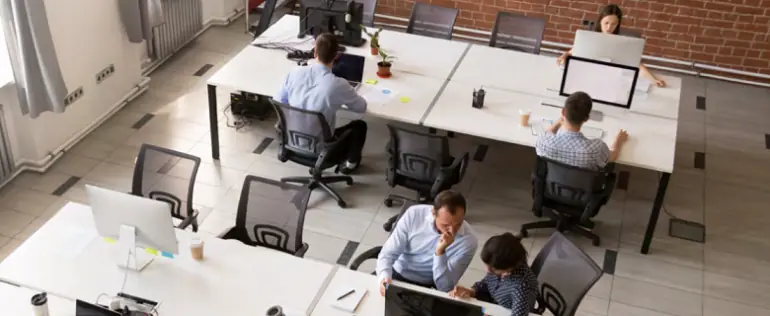
Google was at the forefront of developing the quirky corporate culture of modern technology companies: casual codes of behavior, games in common office spaces and diverse dining. One of the reasons for these efforts is to promote physical and social interaction between computer programmers and engineers who would otherwise not be predisposed to communicate.
Conclusion
Cushman & Wakefield believe that 4 factors ensure that the office will remain in demand:
- control by management
- optimization of labor productivity
- need for investments that cannot or are impractical to provide elsewhere
- social interaction and formation of corporate culture
Each of these factors feels the destructive influence of remote work. Demand for office space in the future will depend on the degree to which each of these factors can be satisfied outside the office.
5 factors affecting the future of the office
Taking into account the 4 main objectives of offices and agglomeration forces supporting business districts, Cushman & Wakefield believe that 5 main driving factors will influence the degree to which remote work in the post-COVID world will affect the office sector.
- Productivity: stems from the need for management to control employees and provide them with workspace that can optimize individual and overall organizational results.
- Innovation / creativity: related to outcomes but focused on how companies generate new ideas and products.
- Corporate culture and branding: relates to how companies shape corporate culture that translates their values and mission to employees through physical space.
- Satisfaction / employee retention: the ability of space to meet employees' social needs, promote their engagement in work and reduce turnover, and thus increase their productivity. The most important components of the employee experience are mentorship and training.
- Location and construction strategy: emphasis on convenient office location in urban space.
Productivity
One of the main questions regarding remote work - can organization employees be as productive working from home as in the office?
During COVID-19, many organizations are participating in this forced experiment and wondering whether productivity and remote work conflict. Productivity is a measure of finished product output divided by input costs. For relatively simple tasks, productivity can be measured in a simple way (for example, the number of support calls per man-hour, the number of orders processed per day, the number of keystrokes for data entry per day, etc.). However, for most service sector workers, productivity metrics become more complex because these workers do not perform simple tasks that can be easily measured in units. Thus, productivity is often subjective. Although people understand this, Cushman & Wakefield cannot point to a simple and clear metric.
Evidence
One way to increase productivity is the need to increase the flexibility of remote work to maintain business process integrity.
For example, Cisco Systems, implementing flexible work schemes, increased productivity by $195 million in 2003. Although this way of working is not widespread, it demonstrates that employees benefit from not being required to report to the office on the traditional 9-to-5 schedule, every Friday. Greater work-life balance leads to greater satisfaction and greater productivity.
Flexible work schedules can improve work-life balance by reducing commute time and increasing the ability to concentrate. However, after a certain duration of remote work, a decrease in company profits may be observed.
A meta-analysis of 46 academic studies in 2007 shows that employees feel the optimal work-life balance working remotely up to 2.5 days per week. When working remotely more than 2.5 days per week, social connections with colleagues deteriorate. It was also noted that remote work can raise manager ratings and reduce employee turnover. However, results are ambiguous and depend on the industry, type of work and complexity of the job.
Although psychological research says that autonomy increases employee productivity by 5%, management needs to learn to manage a remote workforce. After all, such a workforce requires a management style focused on results, not constant monitoring. And according to a Sun Microsystems vice president, "if you need constant monitoring, remote work of employees is not for you."
One of the most frequently cited recent articles on measuring the impact of remote work on productivity examines a Chinese travel agency's call center. The study shows that productivity increased by 13% due to a combination of employees working overtime and a greater number of calls taken per minute.
However, it is difficult to compare this impact for all organizations given the many cultural differences between different countries. Moreover, a travel agency's call center does not necessarily reflect the work functions of many office workers in a developed post-industrial economy. As with other studies, there may be other factors affecting the results. In this case, there could be selection bias because there were certain requirements for employees who participated in the experiment. For example, having a separate room to work from home, having at least 6 months of experience with the company, and others.
Asking employees to rate their productivity is another method of measuring the impact of remote work on this metric. Employees reported 37 minutes of unproductive time per day in the office compared to 27 minutes per day at home. However, at the same time, 71% of employees noted that it was easy to concentrate in the office, compared to only 61% when working remotely.
Work-life balance also seems to be disrupted: 29% of remote employees struggle with work-life balance compared to 23% of office workers. This suggests that, at minimum, perceptions of work-life balance are more multifaceted than previously assumed.
This is also supported by the Airtasker survey. 46% of respondents constantly overtime and cannot find enough time for themselves during remote work. And at the same time, only 55% of employees feel psychologically comfortable working from home during COVID-19. These problems are exacerbated for young employees who are more likely to have limited space for a home office or even share their living space with roommates.
Another recent scientific study by the US Patent and Trademark Office (USPTO) expands understanding of the nature of working from home. Remote employees were divided into 2 categories: those who worked from home and those who could work from anywhere. In the first case, it was required that workers be located within a short distance from the company headquarters, while the rest could work from anywhere in the world provided they paid for their own communication and correspondence with headquarters.
The productivity of processing patent applications, taking into account the quality of work of the second category of employees, was 4% higher compared to workers who only worked from home. Additionally, the authors believe that these employees received some financial benefit from being able to use cheaper housing outside expensive Washington. Thus, geographic flexibility can positively affect labor productivity.
But it should be noted that employees could only earn the right to work from anywhere in the world after 2 years of working at the company. Other US companies use a similar scheme, for example, GitLab, HitHub and NASA.
Employers can also extract additional benefits from remote work. Research shows that employees agree to an 8% salary reduction if given the opportunity to work from anywhere in the world, and 20% for a more flexible work schedule.
Autonomy-interaction matrix
The diverse data on productivity suggests that the relationship between productivity and remote work depends on many factors. For example, the nature of the work performed, employee qualifications and others. One way to understand this phenomenon is to consider 2 main circumstances: autonomy and interaction. Greater employee autonomy means greater "control, responsibility and freedom of action," while greater interaction means requirements for "personal face-to-face contact necessary for task completion."
The lead researcher, Duffy, depending on the level of autonomy and interaction of employees, suggests distinguishing 4 types of office organizations:
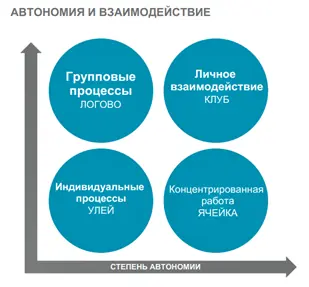
Cushman & Wakefield assert that "clubs" and "hives" make up the largest segment of the office market and are very important when considering threats from remote work.
Clubs are organizations where employees have high autonomy and high level of interaction. Offices of such companies may resemble old coffee houses or clubs. Employees sometimes meet together and benefit from the previously described agglomeration forces and side effects. Since their work is high-level but still requires personal interaction, they will regularly participate in office work but meet only as necessary to ensure interaction.
Due to the greater ability to work from anywhere, their previous office space needs can sometimes be satisfied using virtual office systems. As an example, Duffy suggests the New York offices of advertising agency Chiat/Day with its emphasis on "smooth movement" in and out of office spaces.
Hives are offices with employees who have low autonomy and low level of interaction. For example, call centers. They represent a threat to office space demand in the US, as they are increasingly outsourced to other countries and managed remotely.
Conclusions
- the impact of remote work on productivity varies greatly depending on employee personality, role and complexity of work
- optimal work-life balance is achieved working from home no more than 2.5 days per week
- to achieve maximum productivity, management must orient employees toward results, not constant monitoring
- by offering employees the opportunity to work remotely, management can reduce office rental costs and salaries
Creativity
The modern office is becoming increasingly technological, creative and knowledge-based. Although companies may think about revenue per employee or aggregate productivity metrics, the key benefit often becomes the ability of employees to implement new ideas and be creative. Examples include advanced technology internet companies, marketing firms, staffing agencies, consulting firms and many human rights non-profit organizations. This is where increased remote work may seem more challenging, as creativity often stems from personal and spontaneous interaction. According to one definition, "Innovation represents the fundamental renewal process in any organization. If it doesn't change what it offers the world and how it creates and delivers these offerings, it risks its survival and growth process."
Evidence
There is an opinion that innovations thrive "when ideas can accidentally connect and recombine with other ideas." This is why advanced companies spare no effort creating more places where spontaneous interactions between employees can occur. This is the office kitchen, water cooler and spacious comfortable lobbies.
Research shows that remote work increased product development efficiency and innovation speed in creative teams. However, this was accompanied by an important caveat: all organizations still maintained personal contact, even with flexible work schedules. Companies did not adopt a 100% remote work model. The authors note that companies "cannot do without sufficient level of personal contact," emphasizing that purely virtual offices are likely to hinder innovation.
This is confirmed by 2 studies suggesting that the optimal result of remote work exists when it is performed only on a part-time basis. This can reduce employee isolation and increase their intellectual interaction.
Also, research shows that under remote work conditions in laboratories, the productivity of employees performing routine tasks decreases by 6-10%. At the same time, employees involved in the creative process increase their productivity by 11-20%.
But what about long-term results within the dynamics of a real organization? A survey conducted by creative firm Mural showed that 47% of employees reported that the quality of their creative design work worsens when working remotely. Meanwhile, only 15% of employees believed that their work was better outside the office.
Empirical estimates of any impact on creativity and innovation are elusive, partly because they are harder to measure, and partly because most studies tend to focus on productivity. Remote work became a double-edged sword when it came to employees' "innovative work behavior." On the positive side, employees noted the ability to better concentrate away from noisy workplaces and easier concentration in their familiar environment.
This suggests that for successful remote work, employees need a place in their home free from distractions, or a coworking space and cafe.
Other positive effects of remote work: the ability to feel more energetic and look at their tasks with fresh eyes.
The drawbacks are isolation and reduced level of communication, which can lead to fewer innovations. Those who work remotely a lot "are perceived as less intensive in communication with their colleagues," which "can ultimately lead to employees missing all kinds of important information and sources of inspiration."
Conclusions - innovation and creativity
- Employees and managers intuitively understand the advantages and risks of remote work and therefore together create the hybrid workplace of the future
- Periodic leaving the office provides tangible benefits for innovation, as it allows looking at projects from a different angle. However, these achievements were not confirmed by prolonged remote work
- Spontaneous cooperation and casual discussions play a key role in creativity and innovation, emphasizing the need for office space.
- Remote work complements office work but does not fully replace most employees, as it reduces the level of innovation.
- Ultimately, the positive impact of remote work on [innovation] can only be fully realized if employees have the freedom to determine the degree of their participation and maintain a balance between physical and digital communication.
Corporate culture and branding
Functioning in offices, it is easier for companies to convey their values and goals to employees. Culture is often formed through personal interaction, and remote work requires significant management effort to maintain corporate culture.
To what extent does remote work affect the ability of organizations to develop corporate culture in which they invest so much? And how might this affect the broader brand communication of the organization with employees and external stakeholders?
Culture
According to management expert Bruce Perrone, "organizational culture defines the jointly used description of the organization from within." Like broad culture, organizational culture can refer to common values, traditions, customs and goals of the organization. Organizational culture can manifest through various aspects of the organization:
- degree of hierarchy
- management style (result-oriented or process control orientation)
- work time and attendance norms
- degree of performance orientation
- dress code and many other aspects
To date, there is no evidence of interdependence between remote work and corporate culture. Instead, culture may manifest in productivity, creativity or employee satisfaction.
However, there are sources that examine the relationship between remote work and culture. First, corporate culture affects how many organizations can adopt various degrees of remote work. Second, a subsequent feedback cycle arises when the implementation of remote work experience begins to affect corporate culture. And finally, managers transitioning to remote work in their organization must think about how to transform existing corporate culture to a more flexible work model.
In addition to such extreme situations as the COVID-19 pandemic, companies can implement remote work to achieve certain goals. For example, increasing profits and productivity, meeting business needs or strengthening interpersonal relationships between employees.
Bruce Stander also believes that remote work can change the core company culture, as employees have greater independence and meet face-to-face less often. There are 3 possible evolution scenarios that are not mutually exclusive and can operate within an organization simultaneously:
- formalization of control
- liberalization
- dissolution
Formalization of control is expressed in increased employer oversight of employees outside the office. Liberalization is a combination of trust and tools for control, for example, mobile phones, laptops, webcams, teleconference accounts, etc. Employees are given greater autonomy, and improved communication facilitates faster decision-making and execution.
Finally, dissolution is the weakening of corporate culture due to reduced physical interaction. Without active management efforts, many common values, norms and traditions may take a back seat. Of course, this brings us to why organizations must manage corporate culture even more when transitioning to remote work.
In one recent white paper released by Zoom, employers warn that managers must constantly understand the feelings of their employees through feedback and surveys. One manifestation of culture dissolution, using Stander's term, is that employees use contradictory formulations when describing corporate culture. Other signs include lack of trust and transparency, and isolation, which as shown reduces productivity and creative potential.
According to research, remote work is best suited for organizations with the following corporate culture:
- low level of management control, stability and predictability
- greater focus on productivity and achievement (compared to costs)
- technological sophistication
- high level of socialization, creativity and innovation.
Branding
The office is a physical space where organizations have the opportunity to implement their corporate culture through branding. It is the physical expression of corporate culture. Offices often feature elements with logos and corporate colors - from pens to meeting rooms.
Marketing firm GNU Group emphasizes that office branding serves several functions:
- unifies disparate places and ensures corporate unity, which is important for large organizations with multiple offices
- improves the visiting experience by making the space attractive while telling visitors about the organization's mission
- increases employee engagement
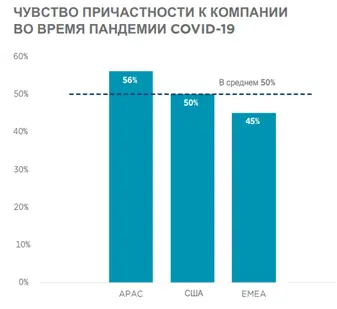
Importantly, half of Cushman & Wakefield client firm employees indicated that it is difficult for them to feel part of the company culture during remote work due to the COVID-19 pandemic.
Conclusions
Although empirical research does not allow fully measuring the impact of remote work on corporate culture and branding, there are frameworks for examining this impact. Remote work can bring some benefits to culture, but generally creates more problems.
- 50% of employees lose connection with their company culture working from home during COVID-19
- even in normal times, less personal interaction means less engagement in corporate culture, so it is more difficult for managers to reinforce certain values through traditions and customs
- transitioning to remote work completely negates the physical manifestation of company culture, which will complicate corporate branding
- transitioning to remote work completely negates the physical manifestation of company culture, which will complicate corporate branding
- Mentorship and learning opportunities decrease due to remote work without active company efforts to replace constant interaction, as well as spontaneous interactions that lead to these learning opportunities.
- The degree of employee autonomy and interaction plays a vital role in whether organizations can continue to maintain a consistent culture. Many organizations are currently under stress in this regard, as they lack the same human interaction that promotes these shared values
Employee engagement and satisfaction
In addition to increasing productivity, creativity and culture, organizations use office space to increase employee engagement and satisfaction. Engaged employees are more productive, and low turnover reduces costs for adapting new employees. In other words, a happy employee is a productive and innovative employee. In real terms, employees benefit from remote work through greater autonomy, reduced commute time and improved work-life balance.
In one study, researchers calculated that remote employees saved $90 billion on work commutes during restrictions imposed due to COVID-19 from March to August 2020. On the other hand, working from home caused disruptions and stress. For example, not all employees have access to specialized offices and share their home with roommates, dependents, partners or spouses. This stress is disproportionately felt by young workers since the start of COVID-19.
At the same time, remote work due to COVID-19 restrictions forced employees to spend on paying for high-speed internet, webcams and quality microphones. And this paid off.
Evidence
Research shows that remote work is characterized by greater fatigue and lower employee engagement. This occurs due to increased uncertainty during job duties and reduced feedback. Therefore, employees feel isolated and think about changing jobs. This is especially true for new employees.
At the same time, now work is at home, always with you. This harms employee psychological well-being and reduces overall job satisfaction. Although at the same time other employees note increased job satisfaction and increased productivity with less stress or exhaustion.
Another remote work experiment in a Belgian company revealed that remote employees experience less stress compared to office workers, without significant conflicts with personal life or changes in engagement.
In a meta-analysis, Martin and McDonald determined that remote work is associated with increased employee commitment to the company, productivity and performance. Finally, KPMG research during COVID-19 restrictions also found that 67% of workers reported improved work-life balance, and 84% remained satisfied with their employer.
Optimal metrics occur with remote work 3-4 days per week, and the worst with constant work from the office or work more than 80%.
Conclusions
- The results of various studies regarding the impact of remote work on employee satisfaction or engagement are ambiguous. This points to the fact that the distributed workforce strategy needs to be tuned for individual organizations and different types of employees, roles, functions and team structures must be taken into account.
- As noted in previous sections, future office demand will be different, based on the autonomy and interpersonal interaction of specific employee groups, because engagement, satisfaction, productivity and creative potential all depend on things like the employee's seniority level, complexity of their tasks, and how well they understand their clients and colleagues.
- The negative impact of distributed workforce on employee satisfaction can be exacerbated by poor management of remote work and employees. Regardless of strategy - from 100% virtual office to all employees who must be in the office every day - talent management still matters.
Location: walkability in the city vs. commuting from suburbs
There are two main locations for all real estate products, including office: walkable urban areas and car-accessible suburbs. In the mid-20th century, most real estate, especially office space, was located in only one place: in walkable urban zones. Then from the mid to late 20th century, a new location for real estate in general, and offices in particular, emerged: convenient suburban areas.
The market demand pendulum swung from building walkable urban office spaces before World War II to building new convenient suburban offices in the mid-late 20th century in popular "edge cities" by John Garreau, business parks, and on roads that urbanist Robert Lang renamed "urban sprawl." In the early 21st century, demand for walkable urban properties increased.
Walkable urban zones
These locations have a floor area ratio (FAR) up to 2.0. They consist of many types of real estate and are accessible by various modes of transportation - car, public transport, bicycle, as well as walking.
One characteristic of walkable urban areas is that most directions and services are within walking distance, or approximately 0.5 miles.
Cushman & Wakefield research illustrated that walkable urban places are divided into 8 types, including:
- downtown/central business district
- areas adjacent to downtown
- urban universities, for example, Charles University, Prague, Czech Republic
- innovation districts, for example, Cambridge, UK
- urban commerce, for example, Shoreditch, London, UK
- suburban city centers - Mumbai-Powai, India
- edge city redevelopment, for example, Alexander-Arena, Rotterdam, Netherlands
- green/brown fields, for example, railway stations, Stuttgart, Germany
- urban universities, for example, Charles University, Prague, Czech Republic
Car-accessible suburb
These locations have lower building density - less than 1.0, and generally less than 0.6. They are characterized by separate types of real estate and lack of mixed-use development. The automobile defines the urban form here, and plots are often divided by surface parking accessible only by cars and sometimes buses.
Highway accessibility is of primary importance.
Acceptable drivable suburban areas include:
- border cities
- cities without boundaries
- business parks, for example, Elk Grove business park at O'Hare
Evidence
Base research for this report Foot Traffic Ahead showed that in the 30 largest urban areas in the US, downtown office rents are 105% higher than suburban offices. Additionally, in various cities, consultants found that there is a capital value premium for walkable urban offices of 30 to 40%, leading to an assessment premium per square foot for walkable urban offices of 135 to 150% compared to suburban offices with overload.

Net office space absorption was 2.5 times higher for walkable urban offices during the economic boom from 2010 to 2019 than their base market share in 2010, meaning they gained a significant market share. Vehicle consumption in suburban offices from 2010 to 2019 was 50% lower than in 2010, meaning that the suburban vehicle market share decreased.
This affects decisions made by company executives about relocations. In a 2015 study of nearly 500 corporate relocations, researchers from Smart Growth America, George Washington University and Cushman & Wakefield found that companies were moving from drivable suburban areas to areas with greater walkability. The average WalkScore for new offices in this study was 87 ("very walkable") compared to the previous location averaging 51 (the boundary between "car-dependent" and "somewhat walkable").
The agglomeration economics mentioned earlier is exactly what explains why walkable urban places matter and will matter in the future. The ability to attract and retain talented employees is a frequently cited reason for relocation decisions. On one hand, firms reduce the risk of lean times through greater labor market flexibility, as more volatile firms seek to be near each other. There are also high rent premiums. Costa and Kahn show that "power couples" consisting of two educated workers are significantly more likely to choose to live in large cities because it reduces the risk of unemployment for either of them.
More importantly, organizations benefit from the agglomeration force of knowledge dissemination as they approach ideas. Assessment premiums and significant market growth (before the pandemic) show that demand for walkable urban offices decreased, while suburban mobile offices shrank and were rented at discounts when losing market share. In short, employers overpay for office real estate to compete for local talent and local knowledge.
There is much evidence pointing to how organizations benefit from this additional knowledge, and one piece of evidence is patent density (patents per 100,000 people) in various regions. They determined that in some US regions patent density is significantly higher than in others, and this provides empirical evidence of what they call "invisibility of knowledge dissemination."
In another case, using Swedish trademarks, Kekezi and Klasson argue that knowledge, like capital, land and labor, is part of the input process, and firms gain access to more knowledge by being physically close to it. Furthermore, Wallsten shows that American firms are more likely to participate in small business innovation research programs when they are near other participating firms. This highlights that the concept of innovative subsidy usage spreads from one firm to another through the socialization of managers and employees of different firms.
Conclusions
When it comes to walkable urbanism, remote work and technology potentially have ambiguous impacts. Knowledge dissemination still requires office space and physical location, and place still still matters. In some sense, information is everywhere, and people can access ideas from anywhere in the world. But accessing ideas involves not just information but the accidental occurrence of meeting other people with similar ideas and jointly generating new ones. This is more likely to happen in person.
While webcams and teleconferencing can partially replace this interaction, Cushman & Wakefield assert that the spontaneity coming from walkable urban areas is important. This is a force that tends to manifest when people physically interact in the office and throughout the city.
Conclusions and next steps
Considering the five main factors affecting the future of the office in a post-COVID world, Cushman & Wakefield suggest that a transition to 100% remote work is unlikely given the ambiguity of most research.
Productivity sometimes increases, but sometimes can decrease, and this will depend on work requirements. In the short term, creativity and innovation may increase, but they can also complicate making creative decisions. Corporate culture is more likely to suffer from an increased distributed workforce, as managers will have to adapt to establishing common values and experience. Additionally, although some employees report greater satisfaction when they can work from home, COVID restrictions on nearly 100% remote work have led to significant changes.
Furthermore, megacities have different mixes of office industries such as finance, professional services, technology or higher education. As noted earlier, some industries are more suitable for remote work, and different professions in these industries vary in the desirability and scalability of working from home.
Finally, the economic and social preferences of office tenants must be considered. In the near future, they will be interested in the accessibility and safety of public transportation, the ability for workers to rent housing near the downtown location and office location in developed business parks.
Consultants believe that a radical society-transforming transition to 100% remote work for office workers is unlikely outside the COVID-19 pandemic. Very few studies examined in this article included fully remote work organizations. In any case, the impact of remote work was a matter of frequency (how often employees can work from home) and choice (which employees can work remotely).
In the end, every studied organization retained office space. Thus, the post-COVID future will likely involve an increase in the volume of remote work, not a complete transition to an office-free world. Although the office will remain an important commercial space, it is necessary to consider how additional remote work and new approaches to office design can affect the total demand for such spaces.

The post-COVID world will see the development of the knowledge economy, as evidenced by the huge growth in stock prices of large technology companies in mid-2020. Additionally, the post-COVID world will see the restart of the experience economy - the opening of restaurants, concert venues, public places, cultural and sports facilities.
These two economies stimulated the growth of walkable urban areas over the last 20-25 years. And when they revive, there is no reason to think that office life will not return to its previous course.