International consulting firm in residential and commercial real estate Knight Frank, which has 370 offices in 55 countries, published a report for 2017 on price changes in urban real estate. The growth leader was Berlin.
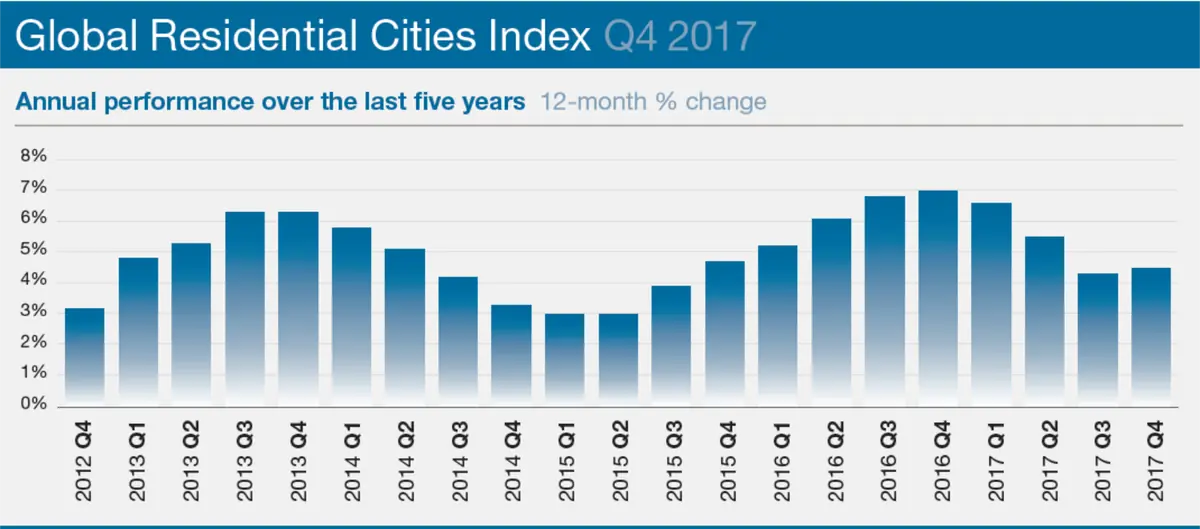
Average world prices rose by 4.5% in 2017, compared to 7% the previous year. The overall dynamics of global property prices, based on analysis of the 150 largest cities in the world over recent years, shows stable growth from 3 to 7 percent per year.
As a result of the removal of fiscal stimuli, capital controls in China, and the beginning of a shift toward normalization of monetary and credit policy, annual price growth above 20% is now shown only by some cities. In 2016, in 12 cities, most of which are located in China, price growth exceeding 20% was registered; a year later, only one city, Berlin, falls into this category.
Germany's capital leads the ranking with prices rising 21% over the year. Significant population growth, a stable economy, record-low unemployment, and strong interest from foreign investors together drove up prices.
The slowdown in price growth in Chinese cities in 2017 had a noticeable impact on the overall index dynamics. In 2016, the 15 Chinese cities tracked by the index grew on average by 23% year-on-year. In 2017, the same 15 cities showed an average growth of 1.6%. Chongqing is now the leader, while previous growing markets such as Shenzhen and Beijing are dragging down the ranking.
Analysis by country shows that Iceland is the leader in increasing prices for urban homes, while Peru is the laggard in 2017.
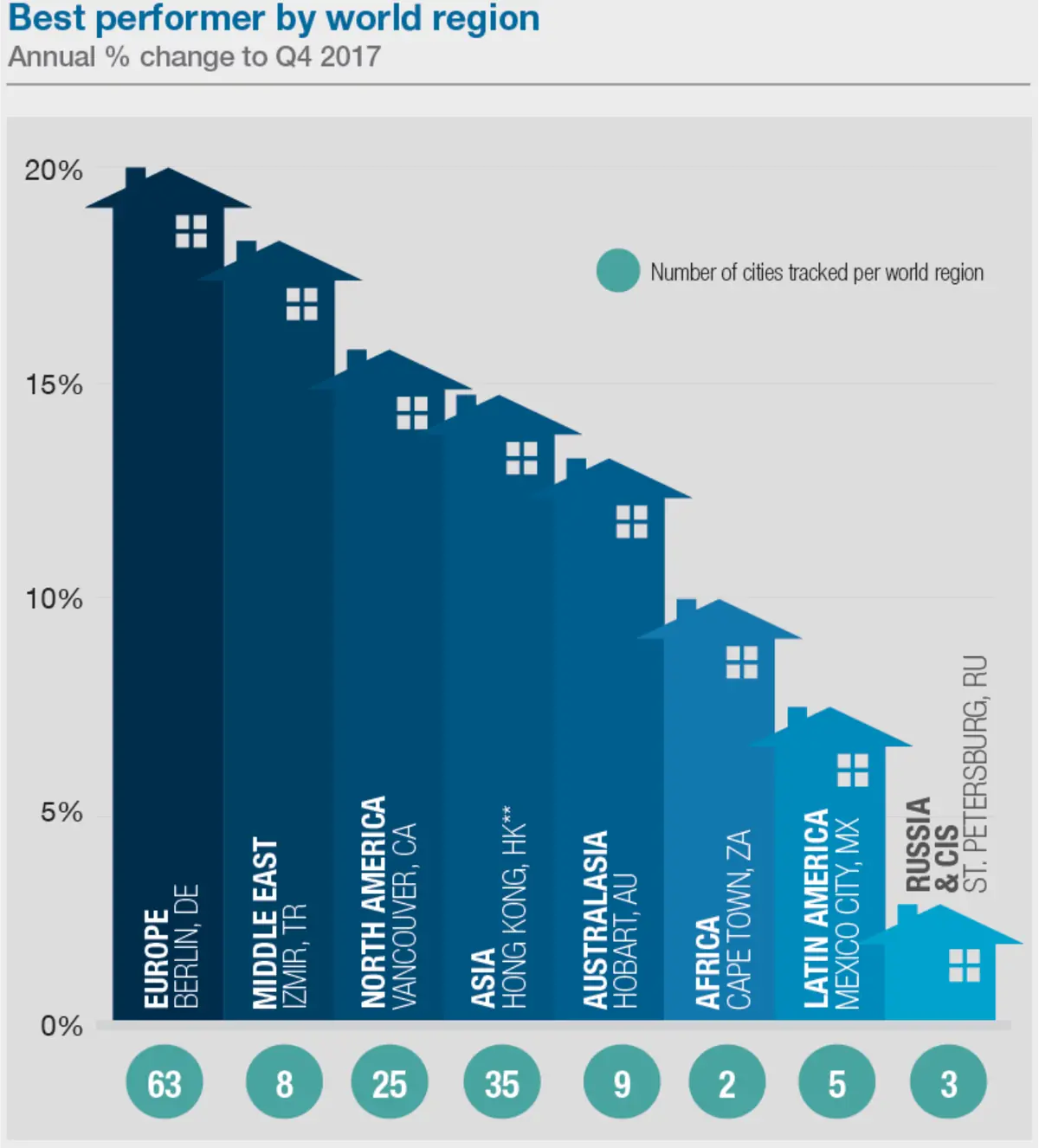
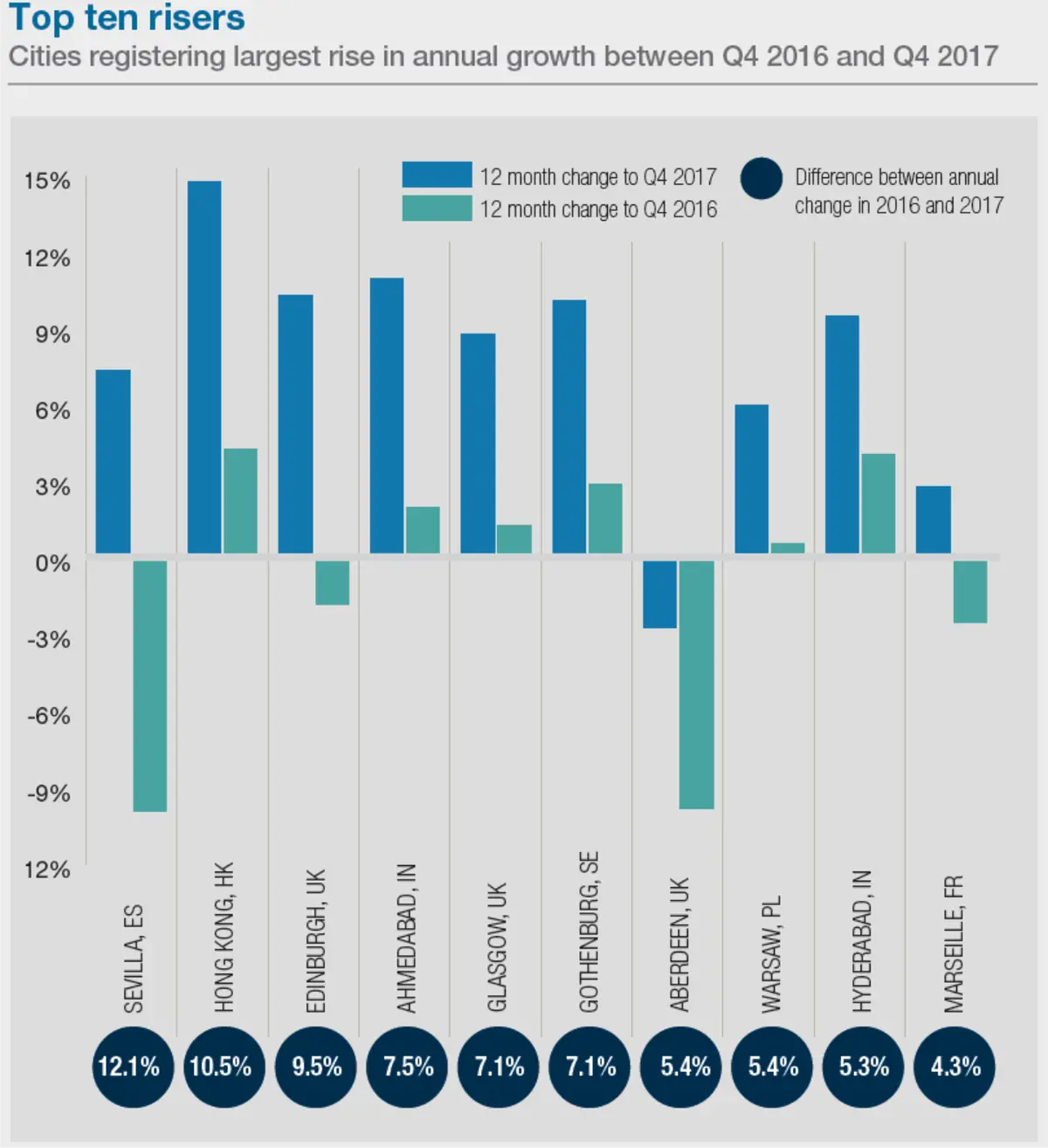
If we look at the markets that, compared to the previous period, changed most in favor of growth in 2017, the leaders are Seville and Hong Kong, where the annual price dynamics changed from -9.9% to 7.4% and from 4.3% to 14.8%, respectively.
Despite the increase in interest rates over the past 18 months, housing prices in US cities are rising. Compared to 15 US cities, prices rose on average by 6.3% in 2017. Seattle and San Francisco took the lead, with prices increasing by 12.7% and 9.3%, respectively.
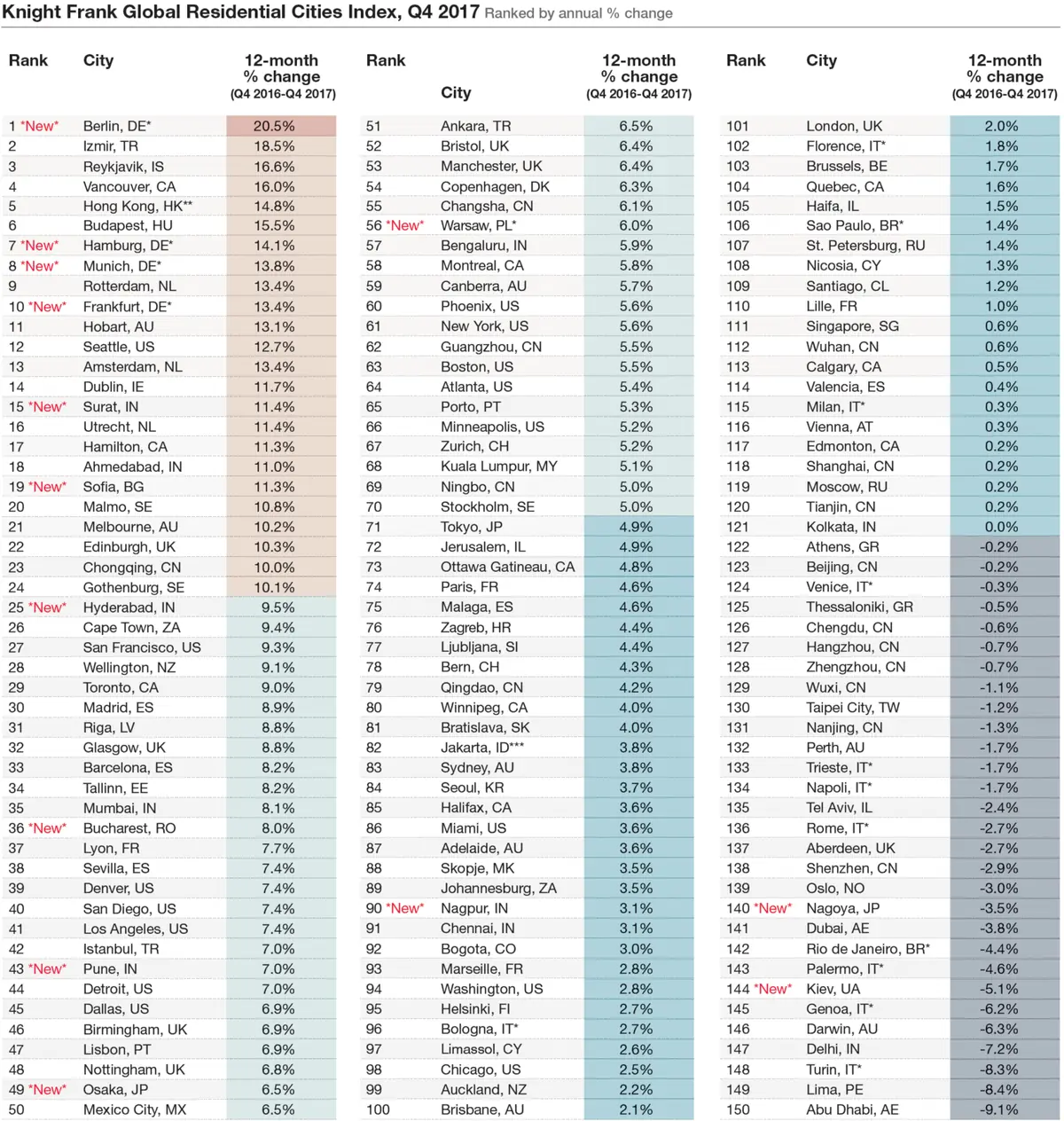
Vancouver rose to fourth place in the global index of property price changes, as a shortage of supply led to a sharp increase in prices. A 15% tax on foreign buyers affected luxury prices more than the housing market. At the same time, as a result of the introduction of numerous new market-cooling measures announced by the government after the February budget, the pace of price growth in the city is gradually decreasing.
Regarding Ukraine, the index includes Kyiv with a price change of -5.1%. Concerning the trend of the Odesa new construction market, we conducted our own analysis in the article
Like mushrooms after rain. Overview of the Odesa new construction market for 2017. Statistics - Dynamics - Trends
Unlike Kyiv, Odesa demonstrates positive dynamics in property prices over recent years. In the next couple of years, due to economic growth and improving consumer sentiment observed in Ukraine, we assess our real estate market as sufficiently promising in terms of property value growth. On our part, as a partner of construction companies, we can offer assistance in the process of selecting and purchasing