It is not without reason that they say Japan is a country of contrasts. There, where in cities everything is so high-tech, suburban houses are built as close to nature as possible, being its continuation.
Suburban houses here are built using frame technology. Considering that a solid stone house would not withstand an earthquake of magnitude 7-8, strong winds, or a tsunami, the Japanese prefer quickly erected wooden structures. Their lifespan is 1-20 years, after which it is cheaper to completely demolish the house and build something more modern on its site.
An interesting Japanese phenomenon is that over time housing becomes cheaper, apartments and houses are bought on credit for 30 years or more at 2-3% per annum. Only the land for development is valuable.
Therefore, most Japanese prefer to rent housing rather than buy it. By the way, a similar trend also exists in some European countries where housing prices are quite high.
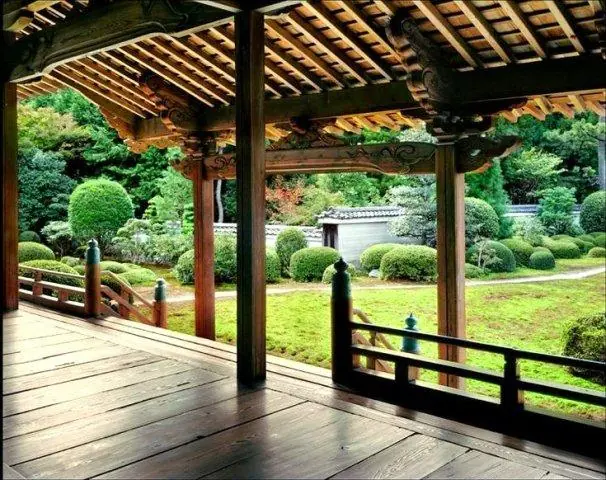
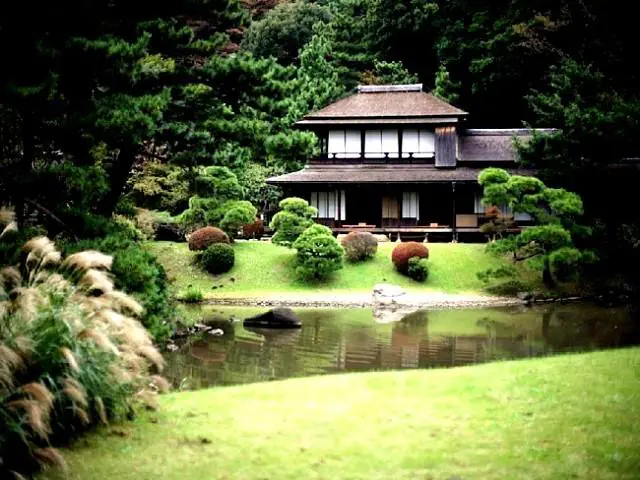
A traditional Japanese house usually stands on a wooden platform on which columns of timber rest. The roof has large overhangs protecting the house from rain and sun. Insulation is often absent, as are the interior walls of the house itself. Partitions that replace walls are wooden frames made of slats that can be moved around the house depending on what space needs to be created. For example, shifting the partitions can yield an office or bedroom, while completely removing them creates a large hall for receiving guests. Any room can become a living room, children's room, or bedroom depending on the owners' plans.
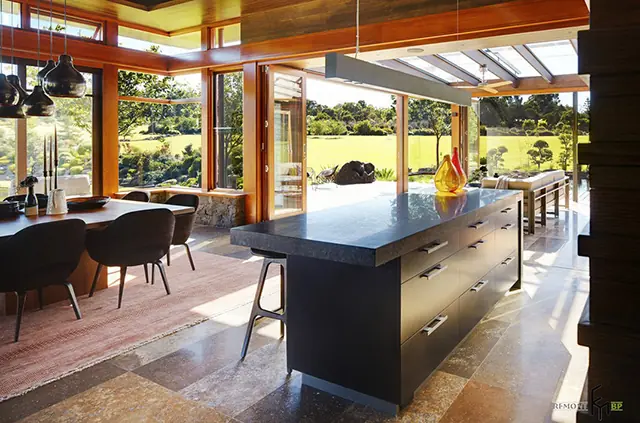
Bulky furniture is absent in the houses, and things are stored in wall niches, which are closed by the very same partitions. It is easy to remove both internal and external partitions, thereby allowing the house to blend with nature.
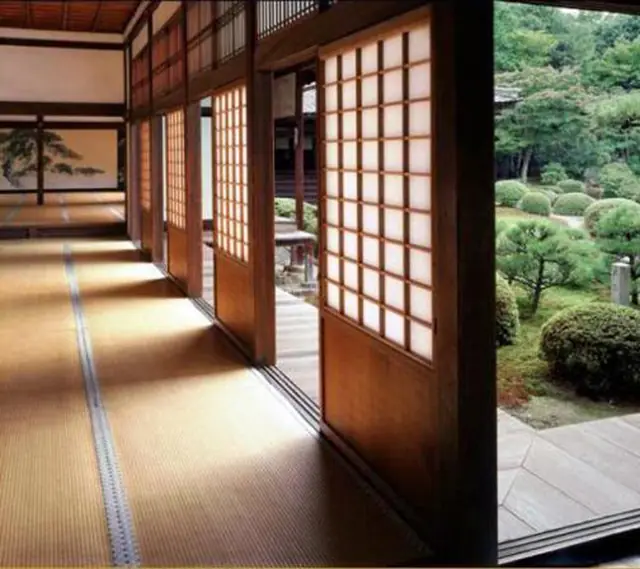
The area of such a house is 120–150 m2. The bathroom and toilet are always in separate rooms. Japanese houses are heated in the cold period by individual gas or kerosene heaters.
The Japanese treat their house as a living being, using environmentally friendly materials in its construction. If one approaches their dwelling creatively, even a cement plant can yield an entire palace, as demonstrated by the Spanish architect
Riccardo Boffill.
As for developers who use environmentally friendly materials in the construction of
new buildings in Odesa, you can find out on the Fresco.od.ua website or from our managers at phone 700-00-42